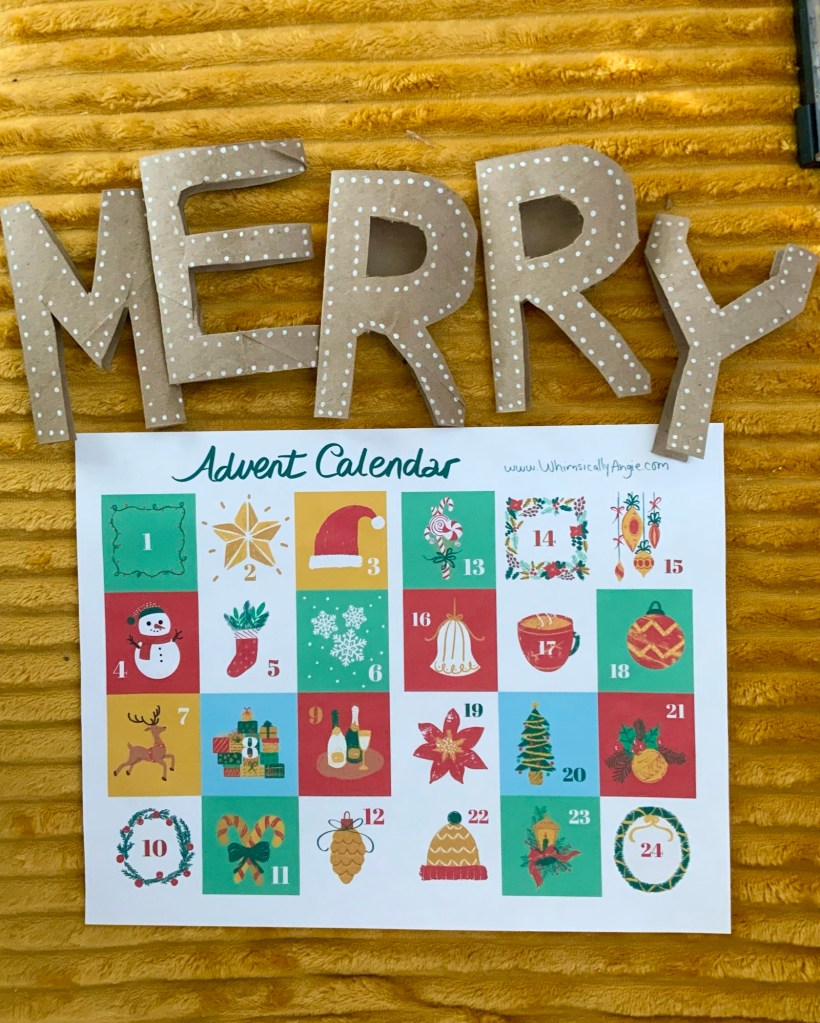
Creating an advent calendar with meaningful activities for kids is a wonderful way to engage them in the holiday season while teaching values like kindness, gratitude, and creativity. Here’s a list of 24 kid-friendly, meaningful activities that can be incorporated into an advent calendar:
1. Write a Letter to Santa
Encourage kids to express their wishes, hopes, and gratitude in a letter to Santa. They can also add drawings or stickers.
2. Do a Craft Project
Create simple holiday-themed crafts like snowflakes, garlands, or handprint ornaments.
3. Make a Paper Chain Countdown
Let the kids make a colorful paper chain to count down the days until Christmas.
4. Read a Christmas Story
Read a holiday book together, like The Polar Express, How the Grinch Stole Christmas, or The Night Before Christmas.
5. Donate Toys
Have your child go through their toys and donate gently used ones to children in need.
6. Bake Cookies Together
Bake Christmas cookies and let the kids decorate them with frosting, sprinkles, and candy.
7. Write a Thank-You Note
Help your child write a thank-you note to a family member, teacher, or friend.
8. Give a Compliment
Encourage your child to give a genuine compliment to a friend, family member, or teacher.
9. Make a Gingerbread House
Put together a fun gingerbread house using a kit or homemade gingerbread pieces.
10. Have a Family Movie Night
Watch a holiday movie together, like Elf, Home Alone, or Frozen.
11. Do a Random Act of Kindness
Help your child perform a small act of kindness, like helping a sibling, drawing a picture for someone, or sharing a treat.
12. Create Holiday Cards
Let the kids make homemade holiday cards to send to family or friends.
13. Build a Snowman (or Paper Version)
If you have snow, go outside and build a snowman. If not, make a paper snowman with craft supplies.
14. Go Ice Skating
If possible, take the kids to an ice skating rink for a fun winter activity.
15. Have a Pajama Day
Spend the day in cozy pajamas, watching movies, playing games, and enjoying indoor activities.
16. Make Hot Chocolate
Have a fun hot chocolate bar with marshmallows, whipped cream, and toppings for a cozy treat.
17. Create a Holiday Playlist
Have your kids help you make a playlist of their favorite holiday songs to play during the season.
18. Do a Puzzle Together
Work on a holiday-themed jigsaw puzzle as a family.
19. Make Snow Globes
Craft simple snow globes using jars, glitter, and mini figurines.
20. Sing Christmas Carols
Teach your kids a few Christmas carols and have a family sing-along.
21. Color a Christmas Coloring Page
Print out holiday-themed coloring pages and let the kids get creative with crayons or markers.
22. Make a Holiday-Themed Craft for Others
Encourage your child to create a simple craft (like a hand-painted ornament, a holiday card, or a small wreath) to give as a gift to a friend, teacher, or family member. It’s a great way to teach them the joy of giving and spreading holiday cheer.
23. Do a Christmas Scavenger Hunt
Set up a holiday-themed scavenger hunt around the house or yard, with clues or items like candy canes or ornaments.
24. Write a Kindness Journal
Help your child start a journal where they can write down one kind thing they did or saw each day.
These activities focus on connection, creativity, and spreading joy, while also allowing kids to engage in hands-on learning, kindness, and reflection. They’re great for fostering a sense of holiday spirit and family togetherness.
FREE PRINTABLES FOR ADVENT COUNTDOWN CALENDAR :


 whimsicallyangie.com